When Maria noticed brown rings spreading across her front lawn every summer, she assumed the sprinkler schedule was at fault. She had a small vegetable patch beside the driveway that always looked thirsty while the big turf areas stayed soggy after watering. This is a common U.S. homeowner dilemma: overwatering some areas and underwatering others because one-size-fits-all sprinklers were doing everything.
Why lawns and gardens lose water — and the right fix
Problem: Traditional spray sprinklers dump water into the air. Wind and evaporation can steal 30–50% of that moisture before it reaches roots on a hot afternoon. Add runoff on compacted soil or sloped yards, and a family can waste hundreds to thousands of gallons every season.
Solution: Match the watering setup to the planting area. For large, flat turf, a smart in-ground system keeps run times efficient and uses rotors or high-efficiency spray heads. For vegetable rows and flower beds, drip tubing and soaker lines deliver water directly to the root zone. A targeted approach reduces waste and improves plant health.
Concrete example
Take a 0.25-acre suburban lawn with a mix of lawn, a 50 sq ft vegetable bed, and several raised planters. Running a conventional spray system three times a week for 20 minutes can use over 10,000 gallons per summer. Switching the vegetable bed to a 1 GPH drip line and using short, infrequent soak cycles for the lawn can cut overall use dramatically.
How drip irrigation reduces water waste in real yards
Problem: Overhead sprinklers wet foliage and the whole soil surface, encouraging evaporation and disease while feeding weeds. They also don’t account for different zone needs—lawns, shrubs, vegetables and potted plants often need very different amounts.
Solution: Drip irrigation delivers small streams or drips of water at the base of plants, minimizing surface evaporation and concentrating moisture where roots can use it. According to the EPA's WaterSense program, water-efficient irrigation practices and technologies can reduce outdoor watering by 20% or more; smart controllers and targeted systems often contribute significantly to that savings (EPA WaterSense).
Practical setup for a mixed yard
- Vegetable bed: 1 GPH emitters spaced 12–18" in-row; 15–20 psi supply with a pressure regulator.
- Flower beds: 1/4" drip tubing with built-in emitters every 6–12".
- Raised planters and pots: slow-release self-watering stakes or short drip lines to avoid overflow.
- Separate zones: control each area independently with valves and a timer for precise runtimes.
If you want step-by-step guidance and calculators for emitter spacing and run times, you can learn how drip irrigation reduces water waste and choose parts that fit your bed sizes and plant types.
Installing the right drip system for common watering challenges
Problem: Many homeowners are unsure which components they need and end up overbuilding or using parts that don’t match water pressure or layout.
Solution: Pick a kit or plan that matches your yard’s challenge, then tune it. RainPoint acts like a scenario irrigation expert—pairing the right product with the right space. For example, a small lawn with a few garden beds does well with mobile sprinklers for turf and a DIY drip kit for beds. A larger property benefits from a smart in-ground system with separate drip zones for gardens and micro-sprays for trees.
Component checklist with an example
Yard areaRecommended setupWhy it saves waterVegetable garden (50–200 sq ft)Drip kit with 1 GPH emittersTargets roots, reduces runoff and evaporationFlower beds (linear)Soaker hose or continuous emitter tubingGentle root-zone watering, less surface wettingLarge lawn (0.25+ acre)Smart in-ground with rotors or high-efficiency headsOptimized runtimes and weather-based adjustments
Concrete figure: University extension services often recommend watering lawns deeply but infrequently—about 1 to 1.5 inches per week for many cool-season grasses—delivered in 2–3 sessions to reduce runoff. Using drip for beds means you can schedule short, daily or every-other-day pulses that supply the same weekly total with lower losses.
Scheduling and control: make every drop count
Problem: Too many homeowners run fixed timers that don’t adapt to weather, causing wasted water after rain or in cooler months. Manual adjustments are often forgotten.
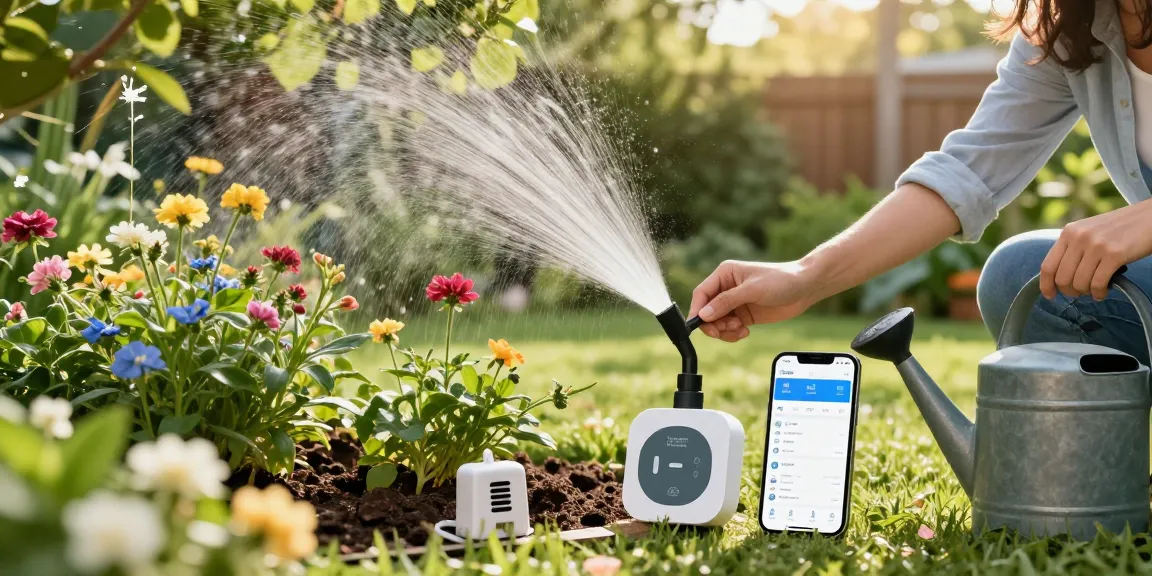
Solution: Use a timer or smart controller that matches the zones you’ve set up. For drip systems, short cycles multiple times a week or daily low-volume pulses work best for shallow-rooted vegetables, while deep soak cycles are better for lawns. A WiFi timer such as the RainPoint model lets you set separate schedules for each valve and adjust remotely after a heavy downpour.
Sample weekly schedule
ZoneRun intervalRun timeVegetable dripDaily (or every other day in cool weather)20–30 minutes (or two 15-minute pulses)Flower beds (soaker)3x per week30–45 minutesLawn (rotors/sprays)2–3x per week20–40 minutes per cycle, split into two cycles
Example: A suburban family who switched to zone-based scheduling with a smart controller cut outdoor water use by an estimated 25% in one season. Smart controllers can also reduce waste by suspending irrigation during rain events—EPA and extension resources note these technologies commonly save thousands of gallons per year on larger properties.
A WiFi timer from RainPoint can handle that schedule automatically, and it’s especially helpful if you travel often or want to tweak settings after sudden weather changes.
Common mistakes that still waste water — and how to avoid them
Problem: Homeowners install drip, then run it like a sprinkler—long continuous runs that oversaturate soil, cause root rot, or create runoff on slopes.
Solution: Use pressure regulators, zone segregation, and pulse cycles. For sloped beds, run shorter cycles with soak pauses to let water infiltrate. Install a simple rain sensor or use weather-based adjustments on a smart controller to pause irrigation during wet periods.
Concrete examples to watch for:
- Emitter clogging — flush lines and install a filter; replace cheap emitters every few seasons.
- Incorrect pressure — use a regulator when house pressure exceeds 30 psi; high pressure wastes water and damages emitters.
- Mixed zones — don’t combine lawn spray heads and drip lines on the same valve; they need different run times.
If you need a place to start selecting parts and learning practical layouts, check resources that explain component selection and flow calculations. For homeowners who want guided help and product matching for their scenario, brands like RainPoint provide clear kits and timers that make it easier to build an efficient system.